
5 Shag Haircuts for Women Over 60 with Fine Hair
A shag after 60 is a kind of gentle rebellion against flat hair. Where a blunt cut can sit heavy on fine hair and show every thin patch, a shag breaks the hair up into layers of different lengths, so light gets in, air gets in, and the whole shape looks fuller than the hair underneath actually is. The five shag haircuts below were chosen for exactly that reason: each one uses choppy, feathered or curly layers to create movement and volume, without asking for a long styling routine or a cut that is hard to grow out. Each entry comes with honest notes on who it suits and what to ask your stylist for.
What Makes a Shag Work for Fine Hair After 60
Layers must be choppy, not just long. A shag is defined by its texture: shorter pieces through the crown and around the face, longer pieces underneath, and ends that are feathered rather than cut straight across. If the layers are too long and too even, the cut reads as an ordinary layered bob, and fine hair falls flat again. If they are cut too short all over, the shape turns into a pixie, which is a different cut with a different kind of upkeep. The sweet spot for fine hair after 60 is a mid-length shag — roughly jaw to shoulder length — with the shortest layers sitting at the crown, where they create lift, and the face-framing pieces cut to open up the face rather than hide it.
Fine hair needs lightness at the ends, not weight. Heavy, blunt ends pull fine hair down and make it look thinner, because the weight drags the roots flat. A shag solves this by removing weight through texturising: the ends are thinned and feathered so they flick and separate instead of hanging as one solid sheet. That is also why a shag suits air-drying so well — the layers are cut to fall into place on their own, and a little wave cream or light mousse is usually enough to bring out the texture. The cuts below cover the main finishes — choppy and straight, soft and wavy, curly, and silver — so you can compare how the same idea behaves on different hair types before you book.
Shag Haircuts for Women Over 60 with Fine Hair
1. The Choppy Shag Bob That Works With Glasses

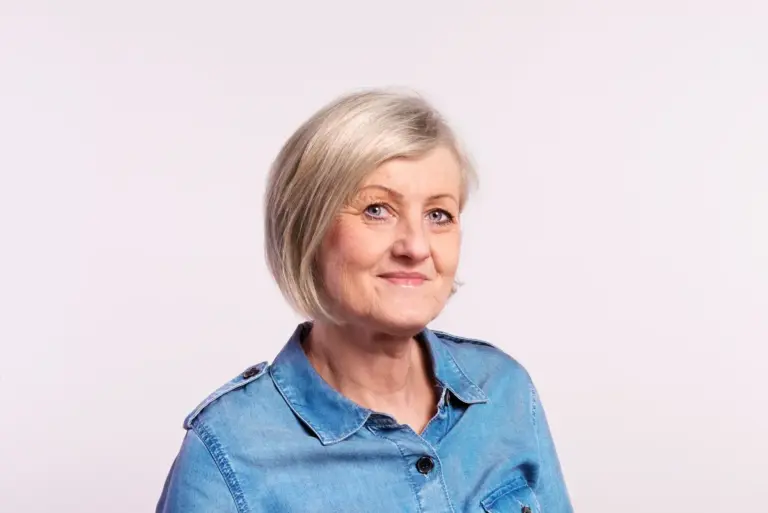
A choppy layered shag bob with a feathered fringe, worn with glasses, and the most practical cut in this gallery for anyone who wears frames every day. The fringe is wispy and side-swept rather than cut straight across, so it sits above the frames instead of competing with them, and the choppy layers through the sides give fine hair a tousled fullness that a smooth bob never would. The length ends just below the jaw, which keeps the shape light and stops it from swinging into the neck, and the feathered ends mean the cut still looks finished on a day when you do nothing more than wash and rough-dry it. It is a good first shag if you have been wearing a bob for years and want movement without losing the neatness of a shorter cut.
Suits: straight to slightly wavy fine hair, glasses wearers, women who want a short, tidy shag. Upkeep: wash, rough-dry with a little texturising spray, trim every 6–7 weeks; fringe tidied between cuts. Ask for: a choppy shag bob to just below the jaw, feathered fringe cut to clear your frames, ends texturised, not blunt.
2. The Soft Wavy Shag for Easy Movement

A soft wavy layered shag with face-framing layers, and the gentlest entry point in this gallery — a shag for women who like the idea of texture but do not want a cut that looks deliberately messy. The waves are long and loose rather than tight, and the face-framing layers are cut to curve softly around the cheekbones, which is what keeps the shape flattering rather than wild. On fine hair this matters: the soft waves give the illusion of thickness because each wave catches the light separately, while the layered ends stop the length from hanging in one thin curtain. It is also one of the easiest shags to live with, because the wave pattern does most of the work — air-drying is genuinely enough, and a bad hair day still reads as intentional texture.
Suits: naturally wavy fine hair, women who want a low-effort shag. Upkeep: wave cream on damp hair, air-dry or diffuse gently; trim every 7–8 weeks. Ask for: a soft wavy shag to the shoulders, face-framing layers, ends feathered so the waves separate.
3. The Curly Shag with Full, Voluminous Layers

A curly shag with voluminous layers, worn in a red turtleneck, and the fullest-looking cut in this gallery — proof that fine hair, when it has curl, can carry a big shape without any backcombing or heavy product. The layers here are cut short through the crown and longer around the sides, so the curls stack and support each other instead of collapsing, and the volume comes from the cut itself rather than from styling. That is the key lesson for curly fine hair: a shag that is cut to follow the curl pattern will hold its shape for weeks, while a cut that fights the curl will need daily wrestling. The length sits around the jaw, which keeps the volume balanced and stops the shape from widening into a triangle.
Suits: naturally curly fine hair, women who want visible volume. Upkeep: curl cream on soaking-wet hair, diffuse or air-dry, do not brush dry; trim every 7–8 weeks. Ask for: a curly shag cut dry or to follow your curl pattern, short layers at the crown, length around the jaw.
4. The Curly Shag, Worn Softer

A curly shag with soft textured layers, the same model as entry 3 in a different pose, and a useful comparison: the same cut, the same curl, but worn softer, with the layers allowed to fall rather than pushed up for volume. Where entry 3 shows what a curly shag looks like at its fullest, this one shows what it looks like on an ordinary day — still layered, still textured, but quieter, and easier to imagine living with. The softness comes from longer face-framing pieces and ends that are feathered rather than scrunched, which is a good choice if full volume ever feels like too much, or if your curl loosens as it dries. Together, entries 3 and 4 show the range inside a single cut, which is exactly what you should ask your stylist to demonstrate before you commit.
Suits: curly fine hair, women who want texture without maximum volume. Upkeep: light curl cream, air-dry, scrunch gently only at the ends; trim every 7–8 weeks. Ask for: a curly shag with soft textured layers, face-framing pieces left longer, ends feathered.
5. Silver Choppy Shag with Crown Volume (AI visualisation)

A silver choppy layered shag with crown volume, and the one AI visualisation in this gallery, clearly labelled: the licensed photographs did not include a silver shag, and silver is the colour most women over 60 actually live with, so this entry fills that gap honestly rather than pretending a photograph existed. The choppy layers are shortest at the crown, which is where fine silver hair needs lift most, and the feathered fringe keeps the forehead open instead of covered. Silver hair shows texture beautifully, because the light catches each layer separately, and a choppy shag makes the most of that — the cut looks fuller in silver than the same layers would in a dark colour. If you are growing out your natural silver, this is the shape to show your stylist, with the note that the crown layers are the whole point.
Suits: silver or gray fine hair, women growing out natural colour. Upkeep: purple shampoo occasionally to keep silver bright, light mousse at the roots; trim every 6–7 weeks. Ask for: a silver choppy shag, shortest layers at the crown, feathered fringe, ends texturised.
Before You Book: A Shag Checklist for Fine Hair
- Check the length first: a shag for fine hair works best between jaw and shoulders — shorter turns pixie, longer turns heavy.
- Ask for choppy, feathered layers, not just long layers — the texture is what creates fullness on fine hair.
- Bring a photo of the finish you want (choppy, wavy, curly or silver) and ask how that finish will behave on your hair type.
- If you wear glasses, wear them to the appointment and check the fringe and face-framing layers clear your frames.
- Ask whether the cut will be shaped wet or dry — curly shags in particular should be cut to follow your curl pattern.
- Plan a trim every six to eight weeks; a shag loses its shape at the ends first, and grown-out layers flatten fine hair fast.
Photographs: licensed photography via Envato Elements (4), curated by Claire Bennett for HairAndGrace, checked at full size. Entry 5 is an AI visualisation, clearly labelled in its heading. Entries 3 and 4 show the same model in different poses, disclosed here; no other two entries show the same model.