
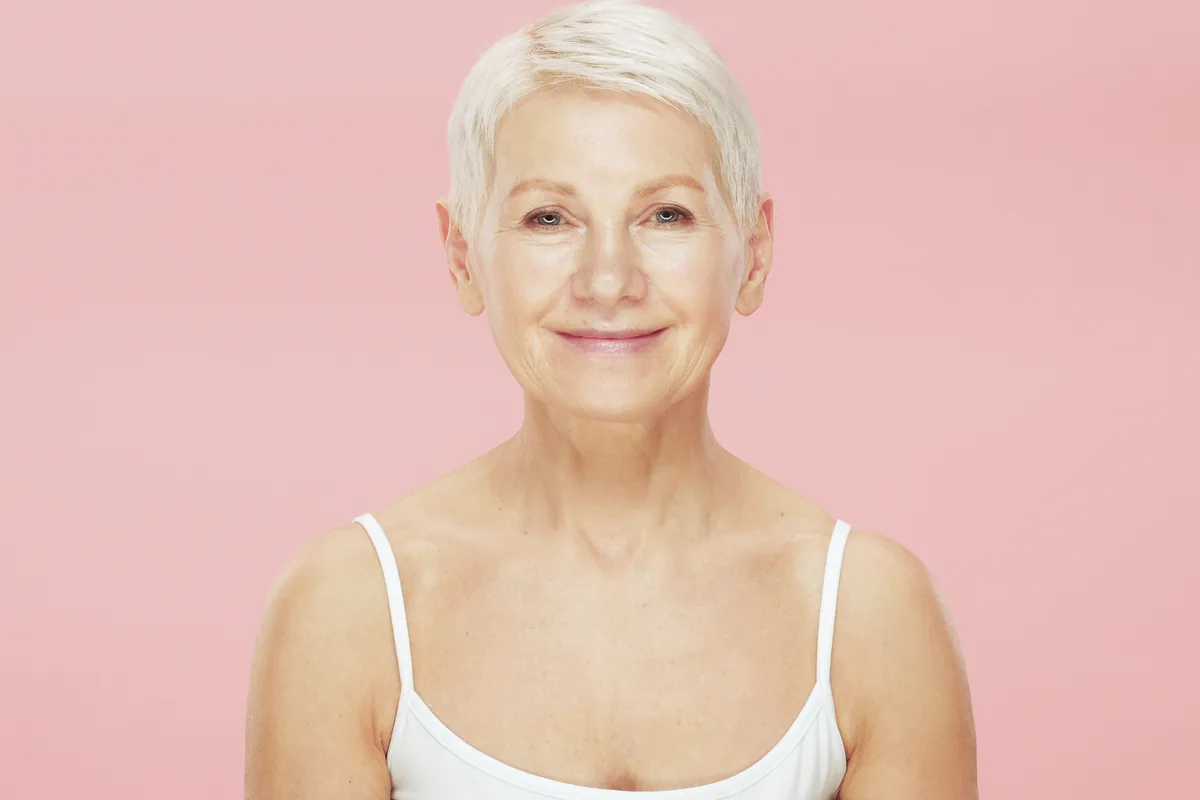
13 Short Haircuts for Oval Faces Over 50
An oval face is the easiest face shape to cut short for — and also the easiest to get wrong. Because the proportions are already balanced, a short cut does not need to correct anything; it only needs to keep that balance. The thirteen cuts below all do that: pixies that keep softness at the crown, chin-length bobs that frame rather than hide the face, and fringes chosen to suit the forehead, not fight it. Every photograph is a real photograph of a woman over 50 — licensed Envato photography and free licensed stock — each checked at full size.
How to Choose a Short Cut for an Oval Face
Keep some length where it counts. On an oval face, the most flattering short cuts are not the flattest ones. A little height at the crown and texture through the top — as in the platinum pixie and the white pixie crop below — usually keeps the face looking oval rather than long, because the eye reads the whole head shape, not just the face. Very tall crowns, though, can stretch a longer oval face, so the right amount depends on your features, hair texture, and the shape of the cut.
Let the fringe do the framing. A full fringe shortens a longer forehead, while a side fringe opens the face up. The two fringed bobs here show both options side by side: the platinum chin bob wears a full fringe, and the layered short bob wears a side fringe. If you are unsure which suits you, the side fringe is the safer first step — it can be grown out or swept across, while a full fringe is a commitment.
Do not add width you do not need. Oval faces do not need side volume to balance them, so be wary of cuts that bulk out at the cheeks. The cuts that work best here keep the sides close and put the interest on top or at the jawline — the tapered nape on the auburn pixie and the clean chin line on the silver-gray bob are good examples of restraint doing the work.
Glasses are part of the cut, not an afterthought. If you wear frames, bring them to the appointment. A fringe must sit with the top of the frame, not compete with it, and a pixie with a tapered side shows frames off instead of hiding them. The silver-gray bob below is the clearest example: the chin length and the tortoiseshell frames share the face evenly, neither crowding the other.
Show the stylist the exact photograph. “Short pixie” covers everything from a buzzed crop to a soft, layered pixie, and “chin bob” covers a blunt edge and a layered, face-framing one. Take the photograph from this gallery that matches your hair texture and face, and point to the exact detail you want — the nape, the fringe, the crown height — rather than relying on the cut’s name alone.
13 Short Haircuts for Oval Faces Over 50
1. The Short Platinum Pixie Crop
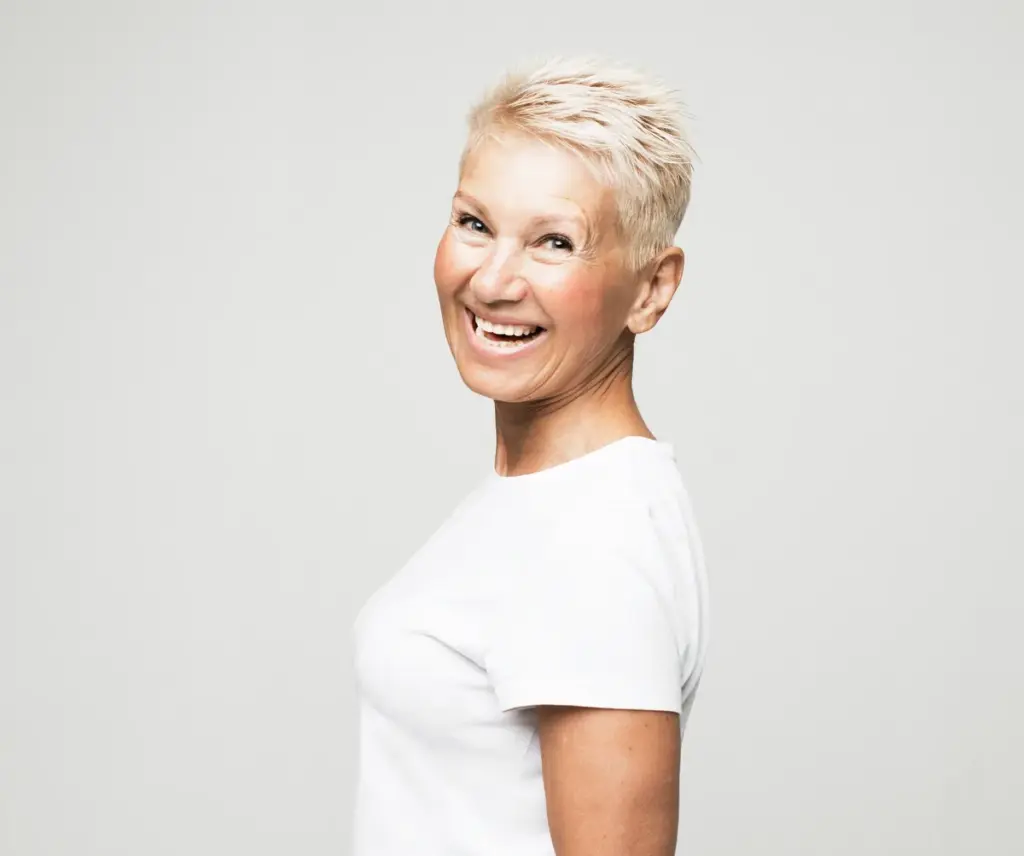
A short platinum pixie with a textured top and tapered sides, worn with confidence. The texture on top is the whole trick: it gives the crown height without stiffness, and the tapered sides keep the silhouette neat around an oval face. Platinum suits this length because the pale tone shows every layer of texture.
Suits: straight to slightly wavy hair; women who want a bold, low-effort cut. Upkeep: texture paste on damp hair, trim every 5–6 weeks. Ask your stylist for: a short platinum pixie, textured top, tapered sides, softness kept at the crown.
2. The Short Auburn Pixie in Profile
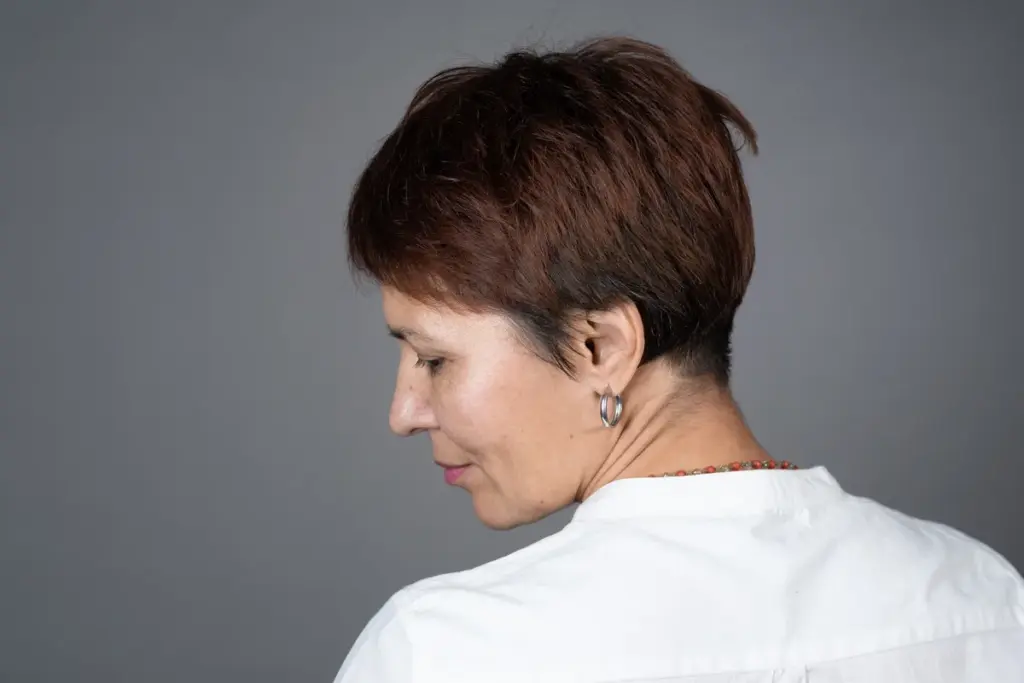
Seen in profile, this short auburn pixie shows what the front view hides: a tapered nape, a layered top, and a clean line from crown to neck. Profile views matter most for pixies, because the nape and sideburn area decide whether a pixie looks finished.
Suits: straight, fine to medium hair; women who want the neatest pixie shape. Upkeep: light styling cream, trim every 5 weeks to hold the nape. Ask your stylist for: a short auburn pixie, tapered nape, layered top, clean profile line.
3. The Short Gray Pixie, Seated and Polished

A short gray pixie worn with a blazer, seated and smiling — the polished end of the pixie range. The cut itself is neat and close, with just enough length on top to show texture, and the overall effect is smart rather than severe.
Suits: straight hair; work and smart everyday wear. Upkeep: smoothing cream, trim every 5–6 weeks. Ask your stylist for: a short gray pixie, neat sides, texture left on top, polished finish.
4. The Platinum Blonde Chin Bob with Full Fringe
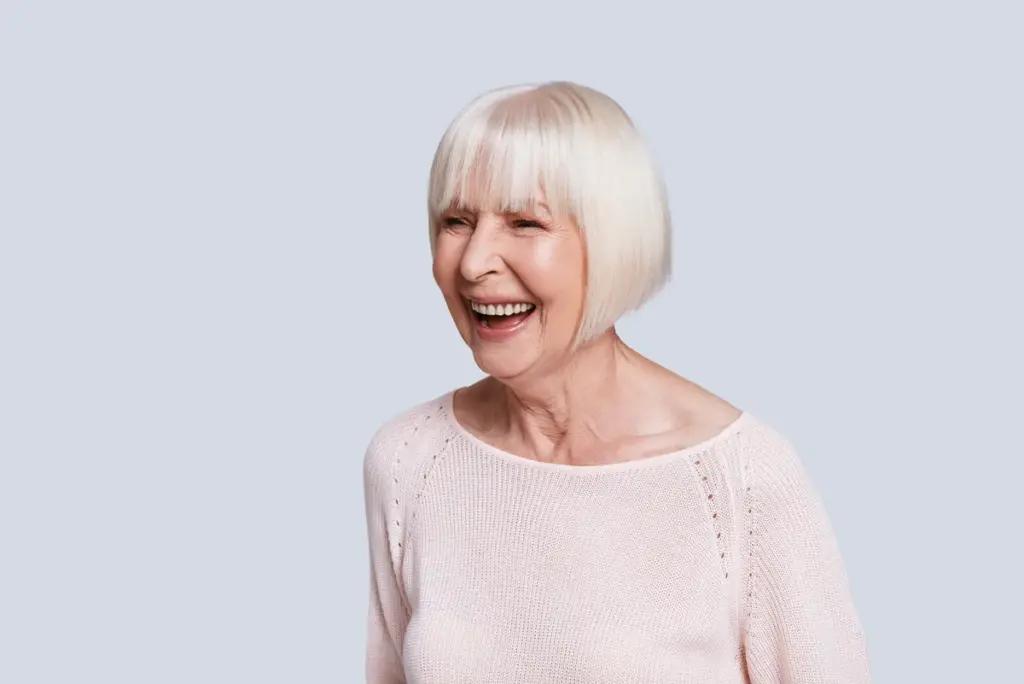
A chin-length platinum blonde bob with a full fringe, worn laughing. The full fringe is doing real work here: it shortens the forehead slightly and draws attention to the eyes, while the chin length keeps the jawline framed. On an oval face this combination stays balanced because neither the fringe nor the length dominates.
Suits: straight hair; women who like a fringe and a polished bob. Upkeep: fringe trim between cuts, smoothing serum on the lengths. Ask your stylist for: a chin-length platinum bob, full fringe cut to brow level, blunt ends.
5. The Blonde Chin Bob with Fringe

A softer take on the same idea: a blonde chin bob with a lighter fringe and face-framing layers. Where the previous bob is blunt and graphic, this one moves — the layers around the face stop the bob from looking like a helmet, and the fringe is wispier, so it suits women who find a heavy fringe too much.
Suits: straight to wavy hair; a softer, more forgiving bob. Upkeep: blow-dry with a round brush or air-dry with a little cream. Ask your stylist for: a blonde chin bob, wispy fringe, face-framing layers, soft ends.
6. The Silver-Gray Wavy Short Crop

A silver-gray wavy short crop, photographed close up and smiling. The wave is the point: short does not have to mean straight and flat, and this crop shows how a little natural wave gives a short cut soft, visible movement.
Suits: naturally wavy hair; women who want movement at a short length. Upkeep: wave cream on damp hair, air-dry, trim every 6–7 weeks. Ask your stylist for: a silver-gray wavy short crop, layers shaped to the wave, soft outline.
7. The Blonde Layered Short Bob with Side Fringe
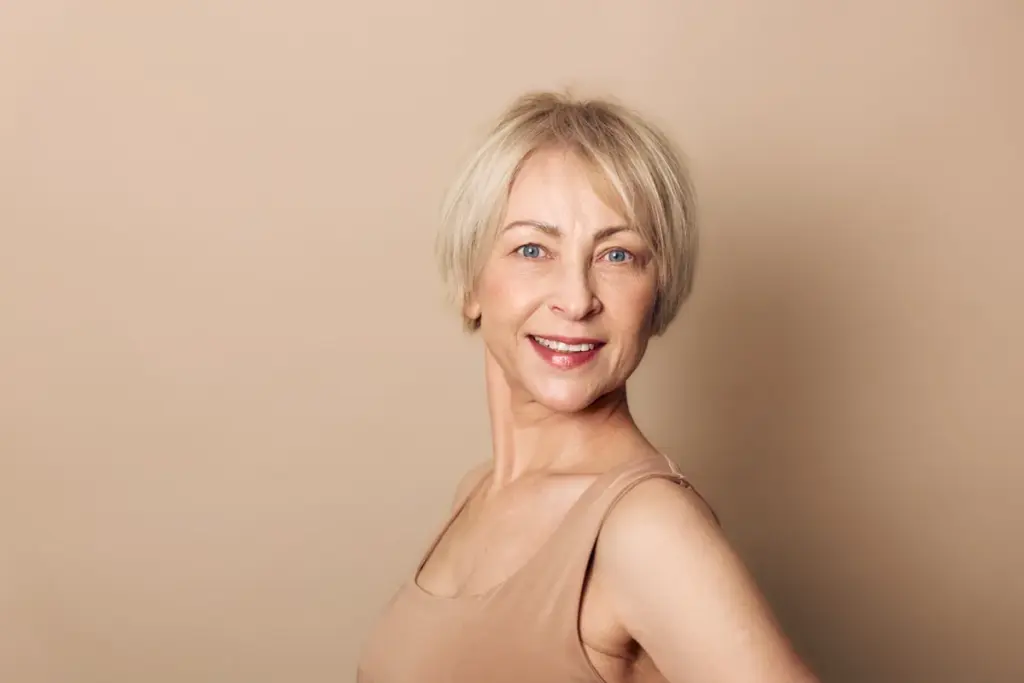
The side-fringe option: a blonde layered short bob where the fringe sweeps across the forehead instead of sitting straight. The most versatile cut here — the side fringe can be worn deeper for evenings or swept back when you want your face fully open, and the layers keep the bob light.
Suits: straight to wavy hair; women who want one cut with several ways to wear it. Upkeep: side part, light mousse for the layers, trim every 7–8 weeks. Ask your stylist for: a layered short bob, side fringe, layers through the crown, length just above the chin.
8. The Dark Short Pixie
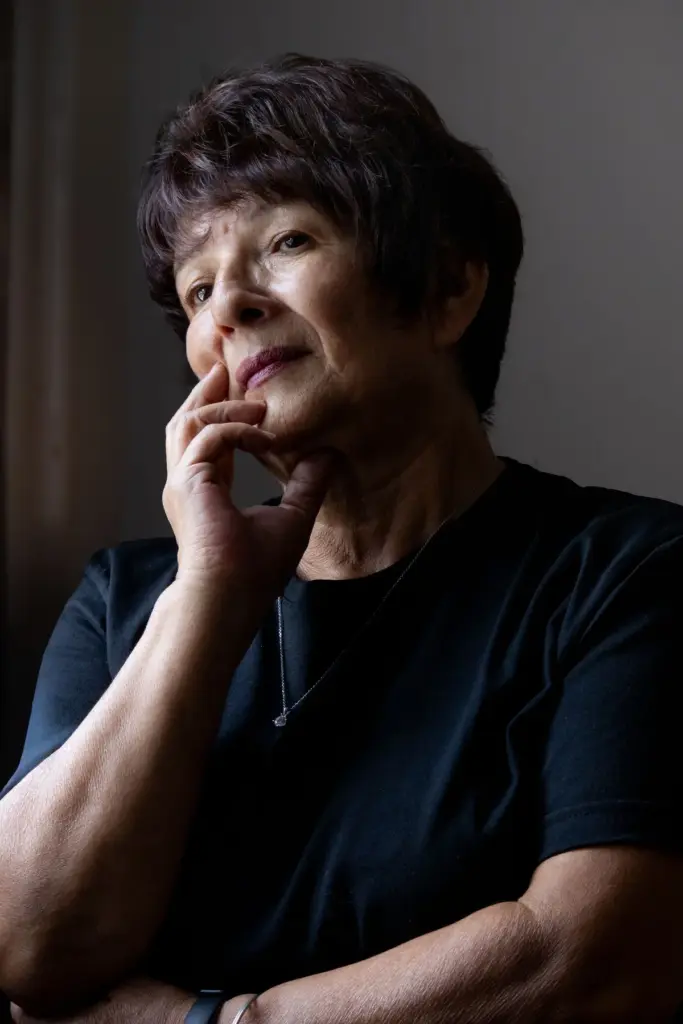
The gallery’s dark entry: a dark short pixie with a soft, feathered top, photographed in low light. Dark pixies read differently from pale ones — the shape has to do more work because the colour does not show every layer — and this one succeeds because the top is feathered rather than blunt, so the outline stays soft even in shadow.
Suits: dark straight hair; women who want a pixie without going pale. Upkeep: light wax for the feathered top, trim every 5–6 weeks. Ask your stylist for: a dark short pixie, feathered top, soft outline, tapered sides.
9. The Very Short White Pixie Crop

The shortest cut here, and the calmest: a very short white pixie crop, photographed face-forward so the oval face shape and the clean crop line are both fully visible. Very short works on an oval face precisely because there is nothing to hide behind — the cut trusts the face shape, and the white tone keeps it soft rather than severe.
Suits: straight hair; the lowest-maintenance routine in the gallery. Upkeep: wash and go, a little wax if wanted, trim every 4–5 weeks. Ask your stylist for: a very short white pixie crop, clean outline, length left on top for softness.
10. The Soft Blonde Pixie, Relaxed

A soft blonde pixie worn relaxed at home — the lived-in end of the pixie range. The hair is tousled rather than set, the fringe falls softly across the forehead, and the whole cut looks like it takes five minutes in the morning. If the sharper pixies feel too severe, this is the version to show your stylist.
Suits: fine to medium straight hair; the easiest morning routine. Upkeep: texture spray, trim every 6 weeks. Ask your stylist for: a soft blonde pixie, tousled finish, soft fringe, easy layers.
11. The Short Blonde Pixie in the City

A short blonde pixie worn out in the world, glasses pushed up, coffee in hand. This is the pixie out in the world: photographed outside the studio, it works with glasses and earrings. The height on top keeps the proportions right even in a candid, unposed photograph.
Suits: straight to wavy hair; busy, everyday wear. Upkeep: texture spray, trim every 5–6 weeks. Ask your stylist for: a short blonde pixie, height on top, tapered sides, easy everyday finish.
12. The Short White Pixie, Smiling
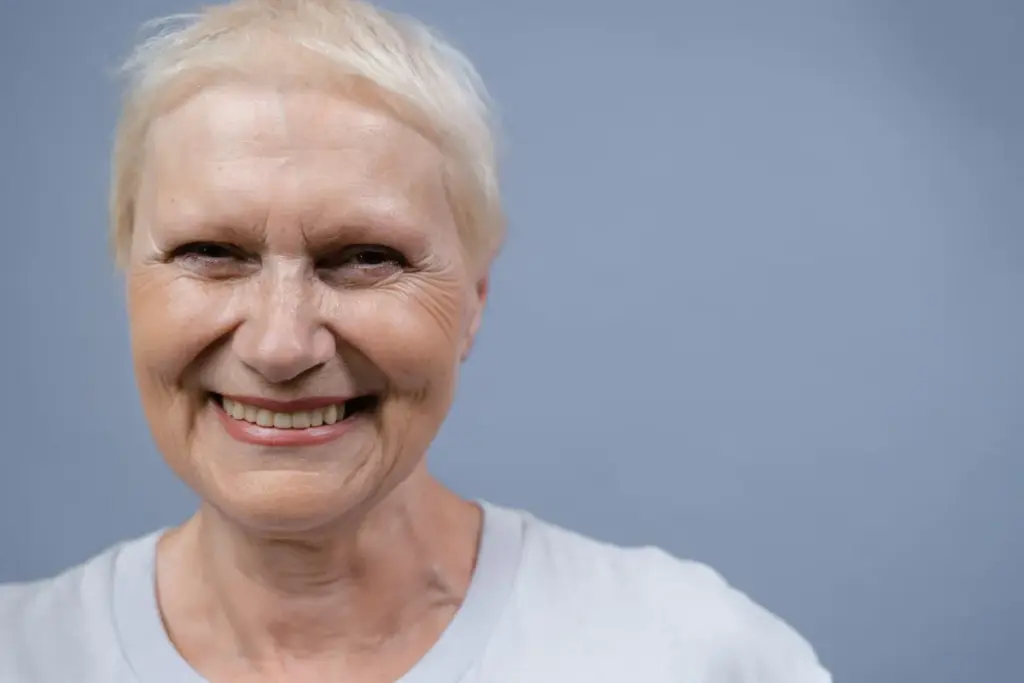
Another white pixie, a different woman and a different mood: all smile, photographed against blue, with the pixie cut close and neat. Against entry 9’s cleaner crop line, this one has a rounder, softer outline — small differences like that are why photographs beat cut names.
Suits: straight hair; women who want a neat, friendly pixie. Upkeep: light styling cream, trim every 5 weeks. Ask your stylist for: a short white pixie, neat close cut, soft rounded outline.
13. The Silver-Gray Chin Bob with Glasses

The glasses-wearer’s bob: a silver-gray chin-length bob worn with tortoiseshell frames, the two sharing the face evenly. The bob’s clean chin line stops below the jaw, so the frames own the upper face and the hair owns the lower face — no competition, no crowding. If you wear glasses daily, this is the photograph to take to your stylist.
Suits: straight hair; daily glasses wearers. Upkeep: smoothing cream, trim every 7 weeks, fringe-free forehead so frames sit cleanly. Ask your stylist for: a silver-gray chin bob, clean chin line, no fringe, length that clears the frames.
Before You Book: An Oval-Face Short-Cut Checklist
- Decide pixie or bob first — pixies are lower-maintenance but need more frequent trims, while bobs give more styling options between cuts.
- Pick your fringe deliberately: full fringe to shorten a longer forehead, side fringe to open the face up, and if you wear glasses daily, a fringe cut to sit with the top of your frames.
- Ask for a little height at the crown rather than width at the sides — oval faces usually suit the former better, but the right balance depends on your features, hair texture, and the shape of the cut.
- Bring your glasses to the appointment and check the cut with them on before you leave.
- Show the exact photograph and point to the detail you want — the nape, the fringe, the crown height — not just the cut’s name.
- Ask to see the back and sides in a hand mirror: a short cut is judged from every angle.
- Book the next trim before you leave. Four to eight weeks, depending on the cut, keeps a short cut a short cut.
Photographs: licensed photography via Envato Elements (8) and free licensed stock via Pexels (5). This gallery is curated by Claire Bennett for HairAndGrace — real short cuts on real women over 50, every photograph checked at full size before publication. All thirteen models appear exactly once; no model appears twice. No AI-generated images appear in this article.
Wear glasses too? See 23 Hairstyles with Glasses for Women Over 50 — twenty-three cuts paired with their frames, from cat-eye pixies to thin-frame curls, with fringe advice for every frame line.
For short cuts that stay easy between trims, see 23 Low-Upkeep Short Cuts for Women Over 50 — pixies, crops and bobs that still look like themselves at six weeks.