

8 Wolf Cut & Soft Shag Ideas: The 2026 Shag, Adapted for Women Over 40
The wolf cut arrived with a reputation: choppy, edgy, a young person’s cut. The 2026 version for women over 40 is something else entirely — softer, feathered rather than spiky, with the volume kept at the crown and the ends flicked rather than razored to points. Adapted this way, the shag does what grown-up hair needs most: it adds movement and fullness without demanding a daily styling routine, and it grows out gracefully because the layers are the style.
The eight looks below are seven real photographs and one AI visualisation (clearly labelled), each checked at full size against this site’s strict test: a woman clearly 40–65, and shag or wolf-cut layering that visibly reads — feathered, choppy or flicked texture, never a smooth bob in disguise. Five Envato photographs that looked like shags at thumbnail size failed that full-size test and were left out, as was one free-stock candidate whose eyes were closed and whose cut did not read at full size.
How the 2026 Shag Is Adapted for Women Over 40
Softened edges, kept texture. The classic wolf cut contrasts a short, voluminous crown with longer lengths. The grown-up adaptation keeps that contrast but feathers the transition, so nothing looks harsh against the face.
Fringe is the frame, not the statement. A wispy, curtain or side-swept fringe softens the forehead and draws attention to the eyes. A heavy, straight-across fringe is the one version to avoid — it reads severe on mature faces.
Layers do the volumising. For fine or thinning hair, short internal layers through the crown create lift that no amount of teasing can fake. The lengths stay long enough to show movement.
Texture over precision. A shag is meant to look slightly undone. Air-drying with a little texture cream usually beats a round-brush blow-dry, which can flatten the very layers you paid for.
Grow-out is built in. Because the cut is layered throughout, three or four weeks of growth simply lengthen the layers. A trim every eight to ten weeks keeps the shape; it never collapses into a single line.
Wolf Cut vs Soft Shag: What’s the Difference?
The two names are used almost interchangeably in 2026 galleries, but they describe different intensities of the same idea. A wolf cut is the bolder version: a short, voluminous crown, longer lengths underneath, and a deliberately choppy, almost mullet-like silhouette. It borrows its attitude from the 1970s shag and the 1980s mullet, then softens both just enough to wear to work.
A soft shag is the same layering with the volume turned down. The crown is still layered, but the lengths are feathered rather than disconnected, the fringe is wispy rather than heavy, and the overall outline stays close to a bob or a shoulder-length cut. Most of the photographs in this gallery are soft shags — that is the version that suits the widest range of faces, hair textures and lifestyles after 40.
Which one should you ask for? If you love texture and want a visible change, ask for the wolf end of the spectrum — entries 2 and 3 show how strong it can look while staying polished. If you want movement without a dramatic silhouette change, ask for the soft shag — entries 1, 4 and 5 keep your current length and simply rebuild it with layers. Either way, bring the photograph: the name alone will not tell your stylist which intensity you mean.
The eight looks below also show how the same cut behaves on different textures. Straight hair shows the layers most crisply, which is why highlights help short shags read. Wavy and curly hair soften the layers and add volume for free, which is why the curly shag (entry 7) needs the least styling of all. Fine hair benefits most from crown layers, while thick hair benefits most from internal thinning that removes weight without removing length.
8 Wolf Cut & Soft Shag Ideas: The 2026 Shag, Adapted for Women Over 40
1. The Feathered Blonde Soft Shag Over 60

The softest entry point to the trend: shoulder-length blonde hair with feathered layers that flick away from the face and a wispy fringe that never covers the eyes. It reads polished from every angle, yet it is essentially a wash-and-go cut. The feathering is the key detail — blunt ends would make this length look heavy, while the flicked layers keep it light and moving even on fine hair.
Suits: straight to wavy hair; women easing into the shag for the first time. Upkeep: trim every 8–10 weeks; air-dry with texture cream. Ask your stylist for: shoulder-length feathered layers with a wispy fringe, ends flicked outward.
2. The Short Choppy Brunette Shag
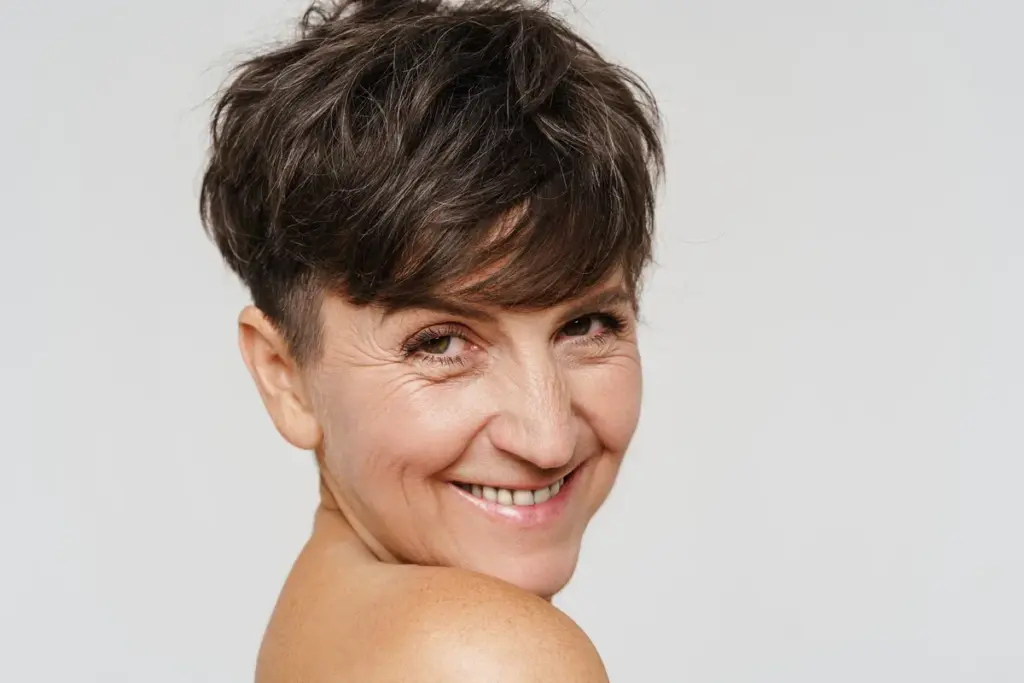
Proof the wolf cut is not only a long-hair idea. Heavily textured layers and a long sweeping fringe turn a short brunette cut into a true short shag — edgy at the crown, soft around the face, with clipper-short sides keeping the silhouette neat.
Suits: fine to medium hair; confident short-cut wearers. Upkeep: trim every 6–8 weeks to hold the shape. Ask your stylist for: a short choppy shag with textured layers and a long sweeping fringe.
3. The Short Choppy Blonde-Highlighted Shag

The textbook short shag: spiky, textured fringe, flicked-out layered perimeter and blonde highlights that make every layer visible. Highlights are doing real work here — without them, short shag layers can blur into one another. The perimeter flick is what separates this from a pixie: a pixie tucks in, a shag kicks out.
Suits: straight hair; anyone wanting visible texture. Upkeep: highlight refresh every 10–12 weeks. Ask your stylist for: a short choppy shag with blonde highlights woven through the layers.
4. The Shoulder-Length Feathered Blonde Shag

Feathered face-framing layers, a soft side-swept fringe and textured ends — the shoulder-length shag in its most wearable form. The layers start at the cheekbone, which lifts the face instead of dragging it down.
Suits: medium to thick hair; oval and long faces. Upkeep: trim every 8–10 weeks. Ask your stylist for: shoulder-length shag layers starting at the cheekbone, side-swept fringe.
5. The Full-Fringe Blonde Soft Shag

The “soft” half of the brief, in one photograph: a straight full fringe, visibly layered flicked ends and a calm, editorial finish. If curtain fringes feel too wispy for you, this is the shag with structure. It also photographs beautifully, which matters if you are taking a reference picture to your appointment — your stylist can see exactly where each layer ends.
Suits: straight hair; fringe lovers. Upkeep: fringe trim between cuts, every 4–5 weeks. Ask your stylist for: a shoulder-length soft shag with a full fringe and layered, flicked ends.
6. The Wavy Golden-Brown Shoulder Shag

Movement is the whole point here. Tousled feathered layers through wavy golden-brown hair give a shoulder-length cut the energy of a much shorter one, without giving up any length. The wave does half the styling for you.
Suits: naturally wavy hair; low-maintenance routines. Upkeep: air-dry; trim every 8–10 weeks. Ask your stylist for: a wavy shoulder-length shag with tousled feathered layers.
7. The Tousled Curly Blonde Shag
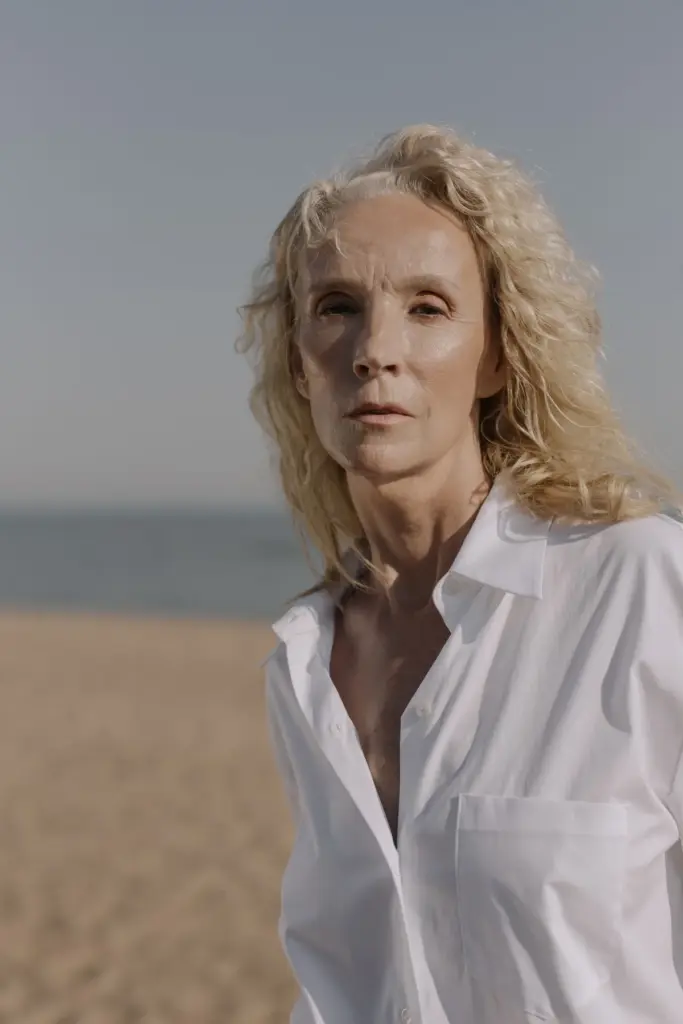
The shag family most people forget: tousled curls with crown volume, face-framing curls and tapered ends, worn long at the shoulder. Curls scatter the layer lines, so the cut looks fuller — a genuine help for thinning hair. It is also the most forgiving shag as it grows: curls hide uneven growth far better than straight lengths do.
Suits: curly and wavy textures; fine hair needing fullness. Upkeep: curl cream, no brushing dry; trim every 10 weeks. Ask your stylist for: a shoulder-length curly shag with crown layers and tapered ends.
8. The Silver Shag with Curtain Fringe (AI visualisation)

An AI visualisation of the angle the real supply could not cover honestly: a shoulder-length silver shag with a wispy curtain fringe and flicked feathered ends. Silver hair takes shag layers beautifully — the light catches every feathered piece — and the curtain fringe keeps the look soft rather than severe.
Suits: silver and gray hair; cool complexions. Upkeep: silver toner as needed; trim every 8–10 weeks. Ask your stylist for: a shoulder-length silver shag with a wispy curtain fringe.
Before You Book: A Wolf Cut & Soft Shag Checklist
- Show your stylist the exact photograph from this gallery — “shag” and “wolf cut” mean different things to different stylists; the picture settles it.
- Ask where the shortest layer will sit. At the cheekbone it lifts; above the ear it turns the cut into a crop.
- Decide your fringe first — wispy, curtain, side-swept or full — because the fringe sets the whole cut’s mood.
- If your hair is fine, ask for internal crown layers rather than surface thinning; the volume must come from structure, not from removing hair.
- Plan the first trim before you leave the salon. Eight to ten weeks keeps a shag a shag; longer, and the layers grow into an ordinary layered cut.
- Ask how much weight your stylist plans to remove. On thick hair, internal layers or point-cutting remove bulk without shortening the outline; on fine hair, weight removal is usually the wrong move.
- Try the cut with your usual parting, not a salon parting. A shag’s fringe and crown layers behave differently on a centre part versus a side part, and you will live with your own parting, not theirs.
- The AI visualisation (entry 8) shows a real, bookable cut — a silver shag with a curtain fringe — imagined on a face the cameras missed.
Photos: six licensed portraits from Envato Elements (Image-Source, vadymvdrobot, AirImages, bclare2, Anna_Ostanina and columbophotog) registered to the HairAndGrace project, one licensed photograph from Pexels (photo 5263318), and one AI visualisation (entry 8, labelled). Treat every style as inspiration for your own stylist.
Prefer a lob to a shag? See 15 Layered Lobs for Women Over 50 That Move Beautifully — fifteen real layered lobs with visible movement, glasses notes and exactly what to ask your stylist.
Want the shag on fine hair specifically? See 6 Shag Haircuts for Women Over 50 with Fine Hair — choppy layers, feathered fringes and tousled texture that add fullness without the upkeep.